The Future Seen
Through Different Eyes
What’s an ideal future? What about a bad one? Do you see it here? Explore our collection and reflect!
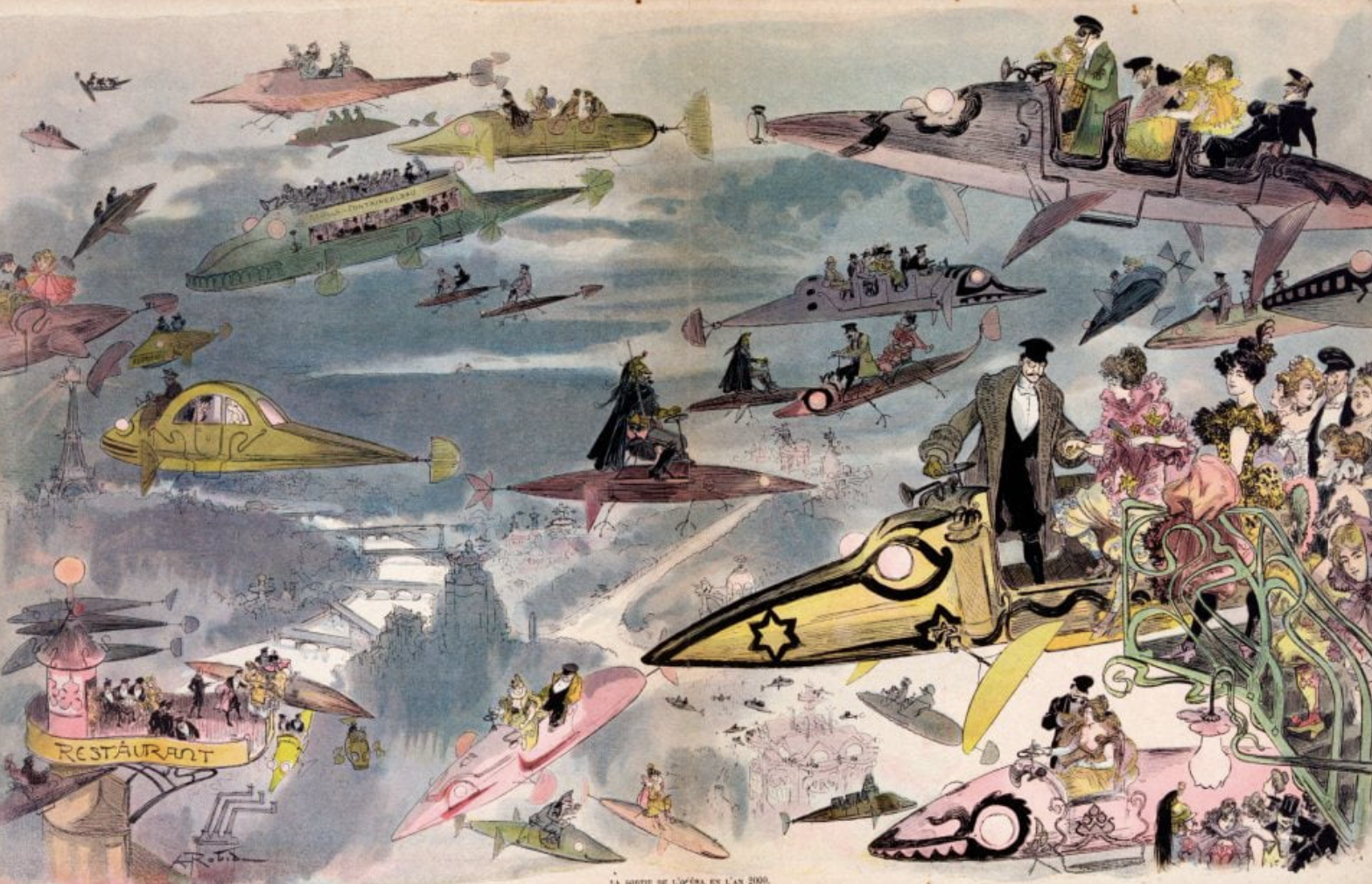
This is how Albert Robida, a 19th century illustrator, saw the future of Paris in 1882. Titled “Leaving The Opera In The Year 2000” the artwork shows flying vehicles, even buses and taxis. People of that era craved innovation and saw the future as more glamorous and progressive, full of technology that transforms everyday life. Robida’s vision shows a hopeful belief in human creativity and progress, reflecting the optimism and imagination of his time. These creative pieces of art inspired generations to dream big while offering entertainment. Flying cars are a very typical depiction of the future but are still simply a fantasy.
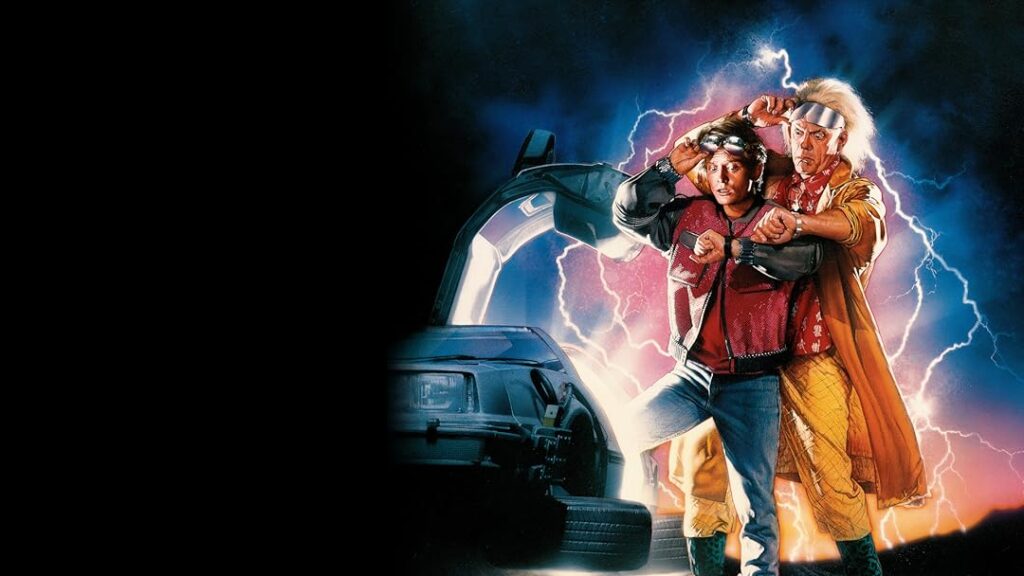
The title says it all! “Back To The Future 2”, the 1989 sequel directed by Robert Zemeckis, tells the story of Marty McFly and Doc Brown traveling through time (using a Delorian) from 1985 to 2015. It portrays a modern world with hoverboards, flying cars, self-lacing shoes, and other advanced technology. However, the imagined 2015 still has its difficulties such as crime and pollution. The film combines dystopian and utopian ideas, showing that views of the future are a mixture of caution and optimism, hope and fear. It’s quite interesting – even with cutting-edge innovations humans and the world is still flawed and, at the end of the day, it is impossible to overcome certain issues. Still, would you want to see the future and change it?
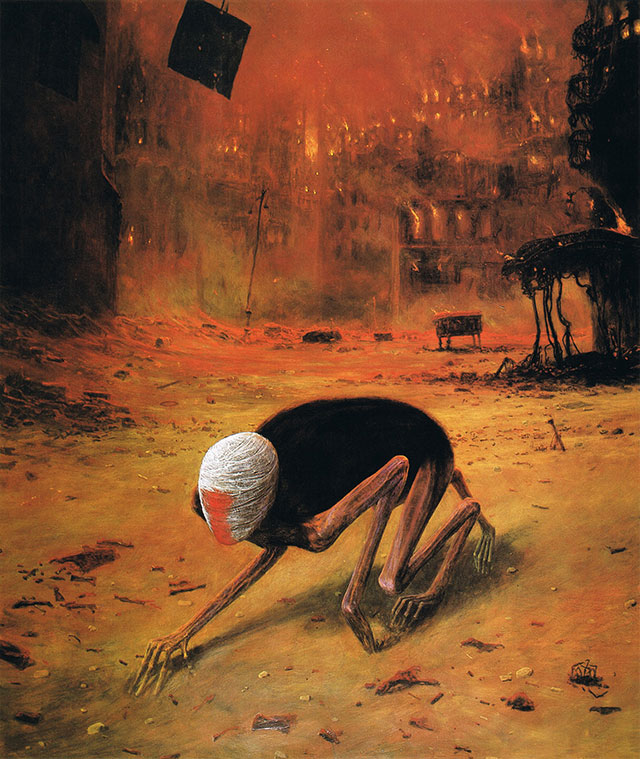
“AE73” by Zdzisław Beksiński, a surrealist Polish painter, offers a rather haunting yet captivating exploration of the future. The apocalyptic and nightmarish portrayal in all his paintings comes from the hardship he endured living through both the Second World War and the Polish Communist era. Surrounded by death and oppression, his perception of what’s to come was deeply pessimistic. He saw the future ruined and in flames, a dystopian landscape filled with decay and terrifying human-like creatures. Beksiński’s pieces serve as a reminder that as human civilization, we are extremely fragile, and with all threats of war, famine, global warming, and more our future hangs in the balance between destruction and survival at all times – especially now.
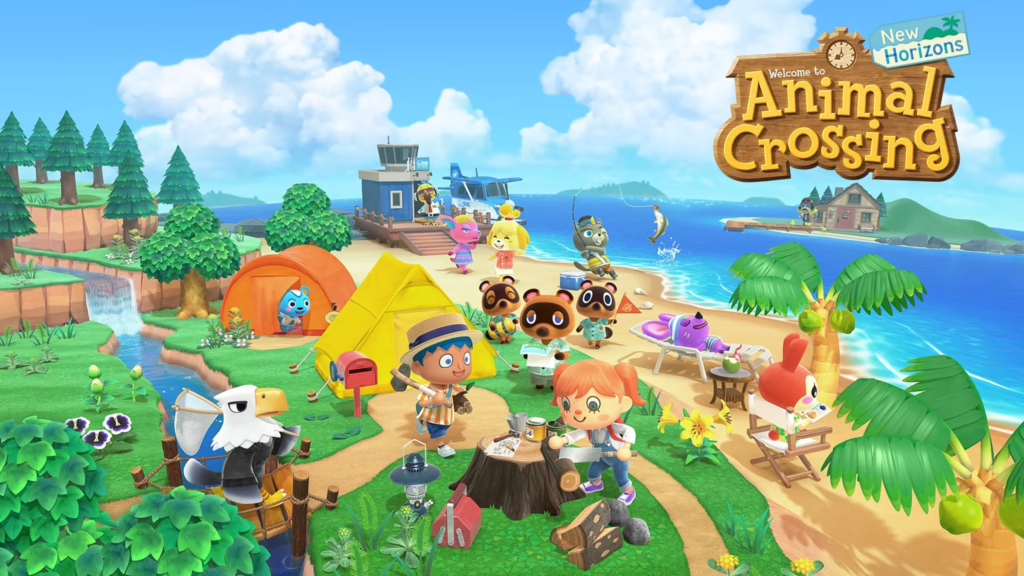
“Animal Crossing: New Horizons” is a video game released in 2020 on Nintendo Switch, developed by Nintendo. After creating a personalized avatar, you get to move to an island full of friendly animals. There are no set objectives or tasks; you can roam free, and, let me tell you, there’s so much to do! You can fish, catch bugs, plant trees, decorate your home and the island itself, talk to neighbors, or even visit a museum. With a strong community, harmony with nature, and creative freedom it seems like a perfect future to have. Throughout the year there are many seasonal events hosted, you can trade items with friends or even participate in collaborative projects to raise money. The game shows the importance of working together for the common good. It also serves as a hopeful reminder that when prioritizing the environment and community the future could look bright and peaceful.
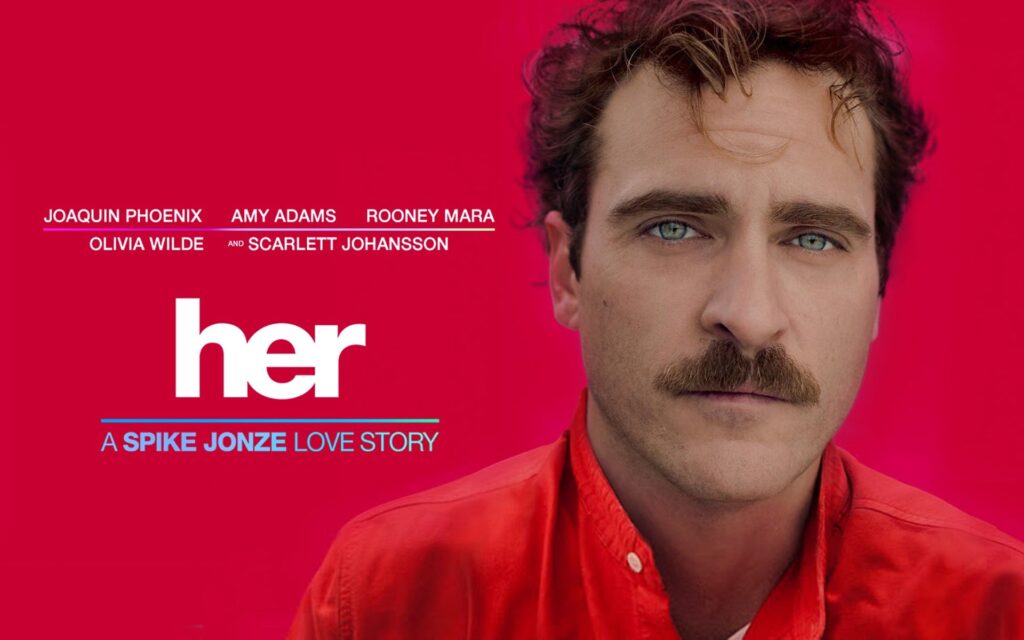
“Her”, directed by Spike Jonze and released in 2013, is a film set in the near future, where technology is used in all parts of everyday life. We follow the life of Theodore (Joaquin Phoenix), who slowly falls in love with an artificial intelligence system called Samantha. The movie explores the connection between humans and robots, identity, loneliness, love and innovation. It is both utopian and dystopian: although technology helps people connect and even achieve their dreams, it also highlights how alienated and emotionally detached people could get in the future. “Her” asks viewers to reflect on what’s to come considering relations between humans as well as poses a question of whether AI can genuinely meet our emotional needs.
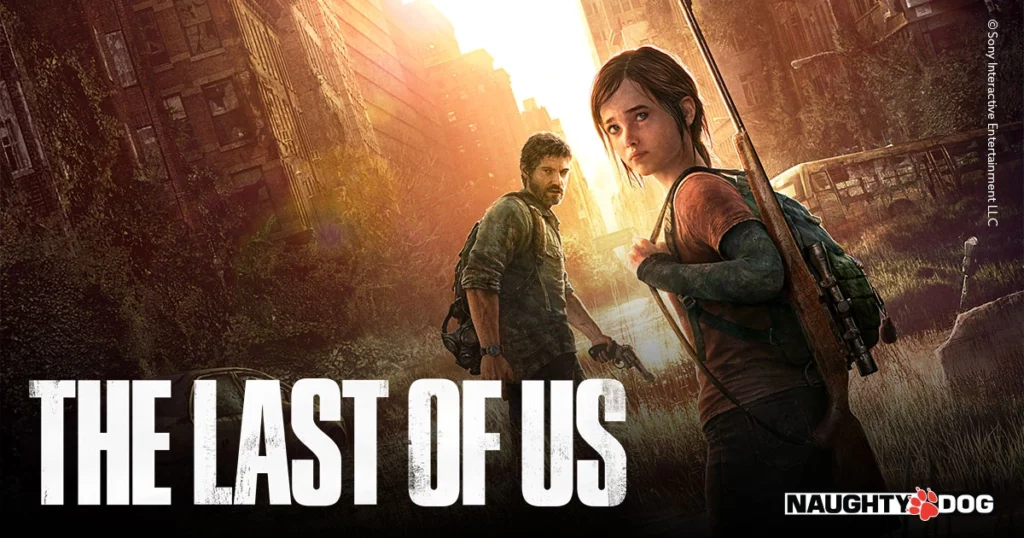
This gallery wouldn’t be complete without zombies!“The Last of Us”, a 2013 videogame developed by Naughty Dog, tells a story about navigating through a fungal virus outbreak that turns people into killing monsters. We follow Joel, a black-market smuggler, and Ellie, a girl who’s immune to the virus, on a journey through the US, trying to find a cure. As simple as that sounds, the narrative goes far deeper than that, illustrating the fragility of humanity and the complexities of human relations in a dying world. Imagine that in a matter of days, everything we’ve come to know as normal is destroyed. Laws are nonexistent, there’s no such thing as healthcare or even electricity and water supplies, people in power turn corrupt, money has lost all meaning… In such a dystopian future our humanity gets altered – we would do anything to survive. I could even say that we lose humanity just to get by. Will such a future eventually happen?
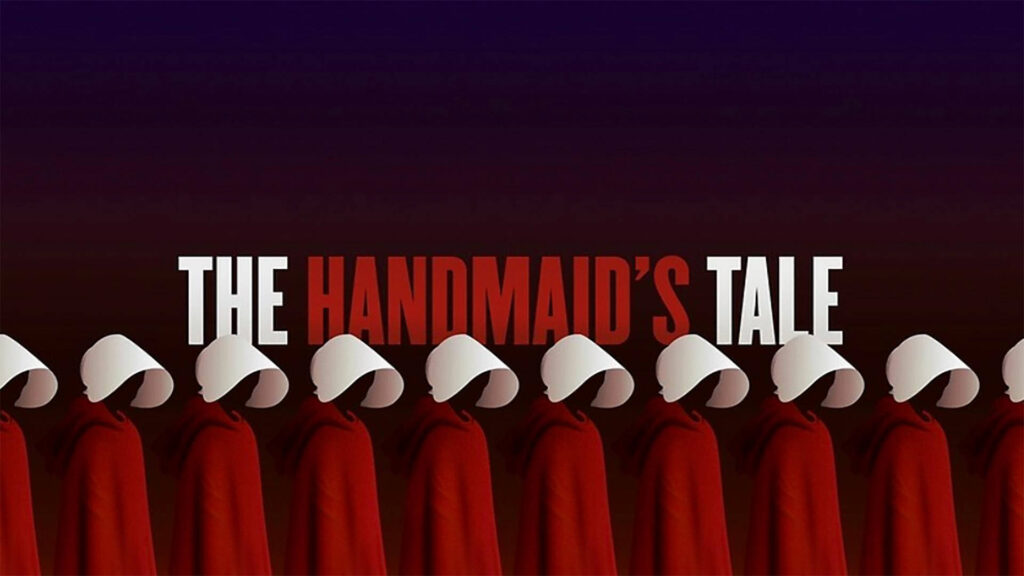
“The Handmaid’s Tale”, a book written by Margaret Atwood, released in 1985, showcases a future where women’s only purpose is to bear children for the ruling class. Gilead, the society where the book takes place, dehumanizes women and treats them as nothing more than reproductive organs – they cannot express any kind of independence. “The Handmaid’s Tale” displays a future where all freedoms are sacrificed in the name of an ideology. It’s a cautionary story, showing us that extremism of any kind can have terrible consequences down the road and that standing up for human rights is essential to our future. Staying silent, not fighting back or simply ignoring leads to a future full of disparities and inequality.
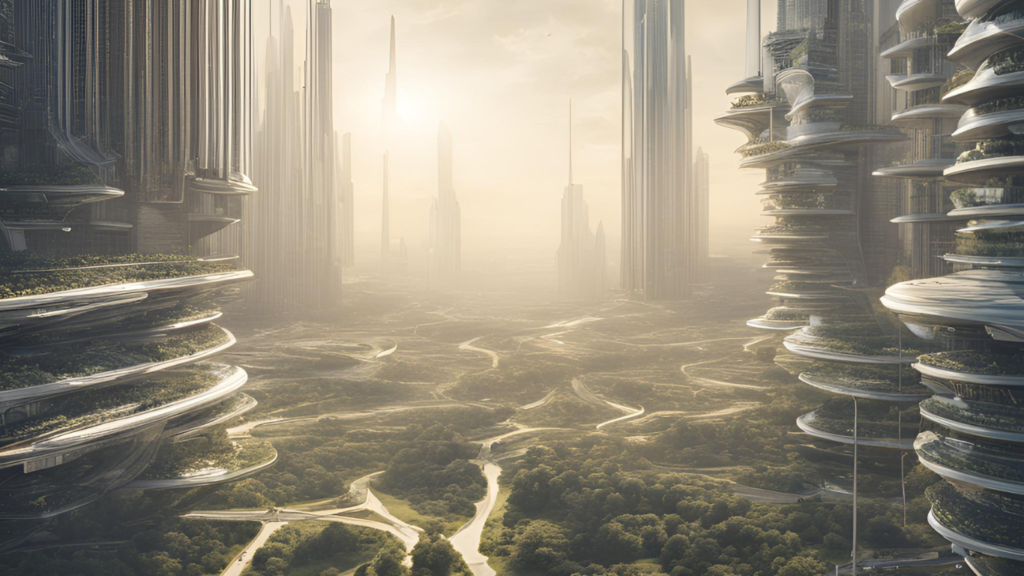
Lastly, when asking Canva AI to create an image with a “The Future Of The World” prompt this image was one of the first to show up. Nowadays, we are bombarded with everything that surrounds Artificial Intelligence; how it will change the world as we know it. But can the computer predict what’s to come? Here we can see a very typical depiction of the future: full of nature with tall, futuristic buildings and no humans in sight. It’s a very positive idea, which nowadays seems unrealistic. With war, heightened political tensions, ecological disasters, hunger, greed, pollution, rising temperatures, non-affordable housing or living and much more our generation feels it’s impossible for the future to be peaceful and utopian. Our ancestors felt excited about it – they saw it as an opportunity to better things around them. For most of us, the future seems dreadful now. How can it be good with so much pain surrounding us? But… Is there a way to turn it all around?